
Author: Haruna Kajimoto
Editor: Naomi Choi
Artist: Ayotenu Dosumu
When you hear the word ‘oxytocin’, what is the first thing that comes to mind? Hormones have garnered a wide variety of reputations. Perhaps you’ve previously blamed testosterone for that one time you suddenly snapped at your friend, or attributed your hours of doomscrolling to dopamine. Among hormones, one of the most well-known is oxytocin, affectionately dubbed the ‘love hormone’. But does oxytocin truly make us more loving? Or does this connotation only tell one side of the story?
Over the years, there have been numerous findings regarding the effects of oxytocin on love and bonding, which reveal that the primary function of oxytocin is to facilitate childbirth. Secretion of oxytocin triggers the contraction of the uterine muscles during labour, and stimulates lactation after birth. The calming effect oxytocin brings to a mother also contributes to deepening the bond between her and her child. But the role of oxytocin does not end here.
Research has shown that oxytocin also plays a part in fostering social bonds and interpersonal relationships. This occurs by inhibition of the central amygdala, a region in the limbic system of the brain that plays an important role in emotional responses, including fear. In other words, increased levels of oxytocin secretion could suppress anxiety and thus have a comforting effect. For instance, studies have found that our bodies produce more oxytocin when we hug our loved ones, or when we fall in love. Interestingly, even pets are involved, as the brains of both a dog and its owner secrete more oxytocin when they interact. Thus, the warm feeling of a pat on the shoulder, a first crush or seeing your dog after a long day of work could all be attributed to the effects of the ‘love hormone’.
However, there are often two sides to the same coin and research has discovered a darker side to the story. De Dreu et al. conducted a study in 2012 investigating the links between oxytocin and co-operation. Male participants were placed into groups of 3, and asked to play an economic game involving real money against a stranger from an opposing team. The study found that compared to those who had received a placebo, men who had been administered a nasal spray of oxytocin were less willing to cooperate with other players.
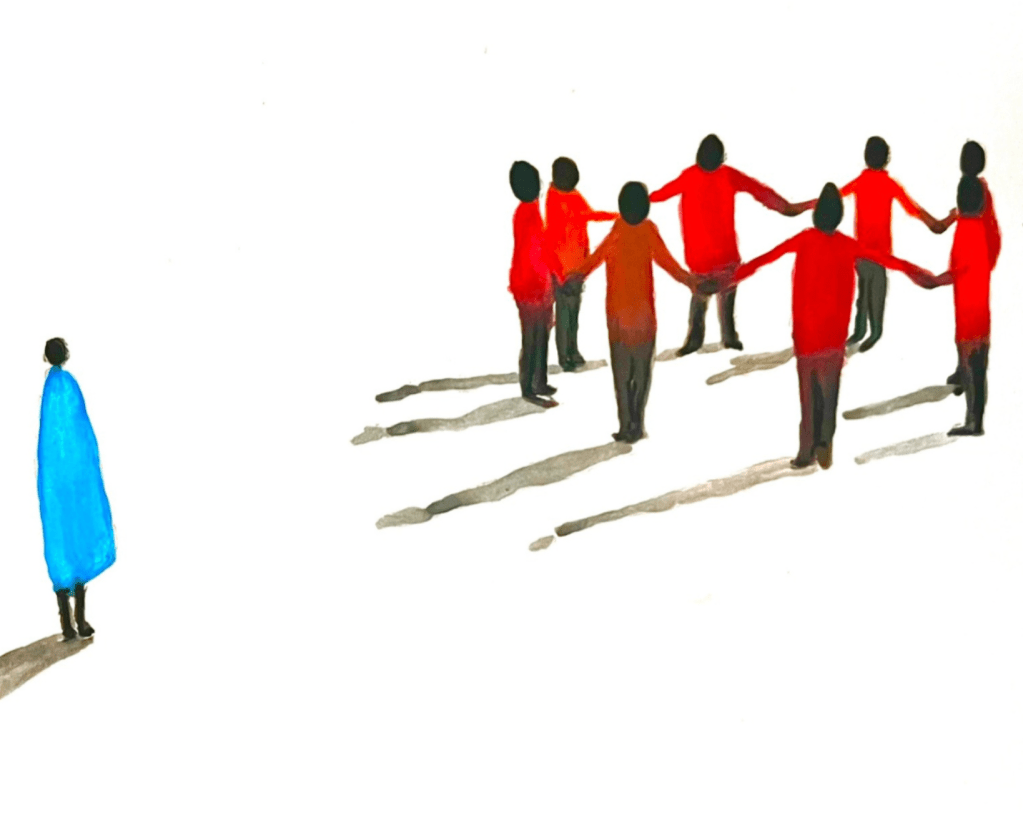
Another study, conducted by De Dreu et al. in 2011 provided even more insight into the darker side of oxytocin. In this study, Dutch participants were presented with the trolley dilemma, where they had to judge whether one person should be sacrificed to save five others. The individual to be sacrificed was given a Dutch name in one condition and an Arab name in the other, and results showed that participants that had been administered oxytocin were less willing to sacrifice a person with a Dutch name. This indicates that oxytocin increases our bonding and sense of belonging to groups that we personally identify with, however, it is important not to overstate the implications of these findings. De Dreu et al. concluded that oxytocin does not directly drive outright discrimination towards out-groups. Instead, this is a side effect of in-group favouritism. From an evolutionary perspective, this makes sense – we are more likely to survive if we are part of a group. It has thus been proposed that oxytocin’s effect was initially observed during childbirth and parenthood, but eventually evolved to become co-opted for social bonding among members of in-groups. In addition, we adopt our worldviews and values from the groups that we belong to. As such, oxytocin’s role in social bonding helps to form a core part of our identities.
Although it makes us more susceptible to bias, and in extreme cases, prejudice, it is undeniable that oxytocin plays a central role in our lives and relationships. So what is the bottom line? Does oxytocin cause love or hate? As evidenced by oxytocin’s complex role in social bonding, hormones do not strictly lead to one behaviour or the other. Saying that oxytocin makes us more loving, or that testosterone makes us more aggressive is not entirely inaccurate, but it also does not reflect the full picture, as how we respond to fluctuations in hormone levels largely depends on context and environment. The same molecule could play a part in both affection and discrimination depending on who we are with and what the occasion is. Therefore, oxytocin is not only responsible for one aspect of love, but all facets of it – from strong belonging to intense segregation, and everything in between.
 Kinesis Magazine