
Author: Julian Jun An Tan
Editor: Layla Khazeni
Artist: Marya Cao
We are living through Earth’s sixth mass extinction—the first to be driven by humans. Nearly 500 vertebrate species have vanished in the last century. While the impacts of biodiversity loss are well-documented, one of the toughest challenges facing policymakers is deciding which species to protect and which to let go.
Quantifying the costs of losing individual species is difficult, which means conservation decisions often rely on emotion. Take the panda—the iconic species of the World Wide Fund for Nature (WWF)—its appeal has captured public affection and support. But what about species that aren’t so charismatic, like vultures?
Vultures as Sanitation Workers: The Unseen Role
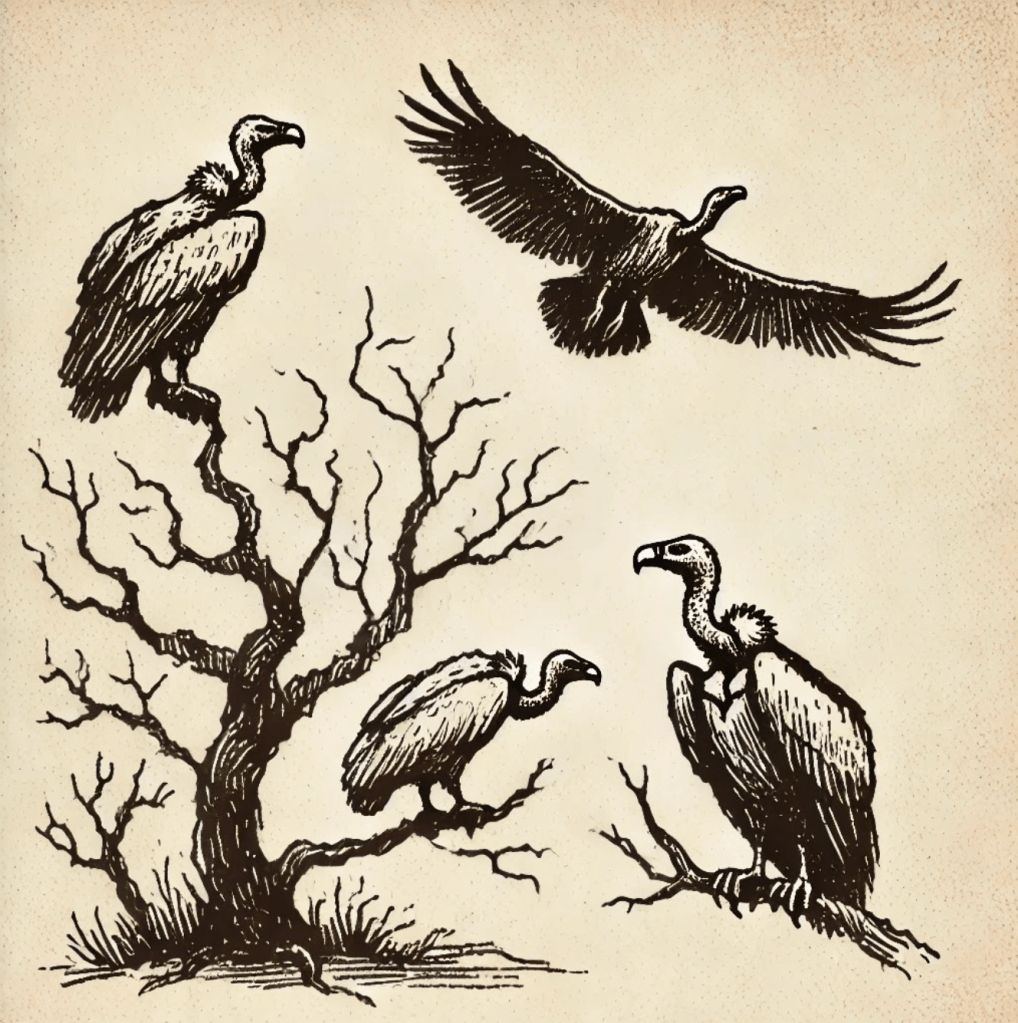
In India, vultures are a keystone species. This means they play a critical role in the ecosystem, and their removal leads to devastating consequences. Before 1990, there were over 50 million vultures serving as natural sanitation workers across India. Today, three common vulture species are critically endangered, with only around 2,000 birds remaining—a collapse caused by a single chemical: diclofenac.
The patent for diclofenac, one of the most widely used painkillers in the world, expired in 1994, allowing cheap, generic versions to flood the market. Farmers began using the low-cost drug to treat their livestock, especially cattle. When these cattle died, trace amounts of diclofenac lingered in their carcasses, and vultures feeding on them suffered fatal kidney failure.
Cows carry a unique cultural status in India, where their slaughter is illegal. As a result, ageing dairy cows are often set free, left to live out the rest of their lives without easy access to food or healthcare, leading to premature deaths. Traditionally, scavengers such as vultures would clean up these carcasses. With their highly acidic stomachs, vultures can consume an entire cow carcass in under an hour, leaving only bones behind. Their efficiency in carrion disposal enabled them to outcompete other scavengers like dogs and rats.
But with vultures gone, carcasses left out in the open began to attract these less effective scavengers. Dogs and rats not only leave flesh behind to rot but are also carriers of diseases like rabies. As the number of exposed carcasses increased, so did the population of rats and feral dogs.
This also worsened another problem: water pollution. Carcasses, now left unconsumed, are often dumped into rivers like the Ganges. This contaminated water supplies and introduced harmful pathogens into the environment, resulting in cascading public health impacts.
The Cost of Collapse: Health and Economic Impact
The consequences of this vulture collapse are significant. The loss of vultures has led to a 4.7% increase in human mortality in areas where these birds once thrived. In a sample population of 430 million, this equates to an additional 104,000 human deaths annually. The total economic toll on India has been estimated at $69.4 billion per year, highlighting the immense, unseen value of keystone species like vultures.
With rising demand for dairy products, this crisis will only worsen. Vultures have a slow reproductive cycle, laying a maximum of two eggs per year, which makes population recovery difficult.
Their story is a reminder of the need for strategic conservation efforts that prioritise species with critical ecological roles—not just those that capture public sympathy. While it may be impossible to quantify the cost of every extinction, more attention is needed for the organisms that uphold the delicate balance of our ecosystems.
 Kinesis Magazine