
Author: Arielle Shina
Editor: Madeline Ross
Artist: Ayotenu Dosumu
Lying dormant for decades, a deadly bacteria frozen in the ground is waiting to be awakened. Anthrax, a deadly disease, is reemerging as environmental conditions shift due to consequences of climate change. But what is behind this deadly revival?
Anthrax, one of humanity’s oldest diseases, dates back to Hippocrates in the fifth century BC. It is caused by the resilient, rod-shaped bacterium, Bacillus anthracis, which is found in soil. Due to its resistant characteristics, such as being both aerobic and anaerobic, it has successfully adapted to both cold and warm environments. One particular trait that has allowed for this is its robust spores, which allow the bacteria to be activated when the right conditions strike. Although the bacterium usually targets animals, recent environmental and social shifts have exposed it to humans, posing a threat. Anthrax has previously been used as a bioweapon in the U.S. military programs in 2001 and has been labelled as a Category A priority pathogen – highlighting the very real risk it poses.
Once anthrax is on the surface, transmission to humans occurs in three ways. Firstly, and most commonly, cutaneous anthrax enters the body through open skin and causes black ulcers and swelling. This is the mildest form of anthrax but can spread rapidly if not treated on time. Another form is gastrointestinal anthrax, residing in contaminated meat which, when consumed, causes abdominal pain, abdominal bleeding, and intestinal ulcers. However, the last and the most severe transmission is inhalational anthrax, which enters the body when spores are inhaled, and subsequently enters the lungs and the lymph nodes. At that point, they germinate and multiply, unleashing deadly toxins. This causes the respiratory system to collapse, often culminating in septic shock. The only way to treat this is through antibiotics prescribed shortly after the event.
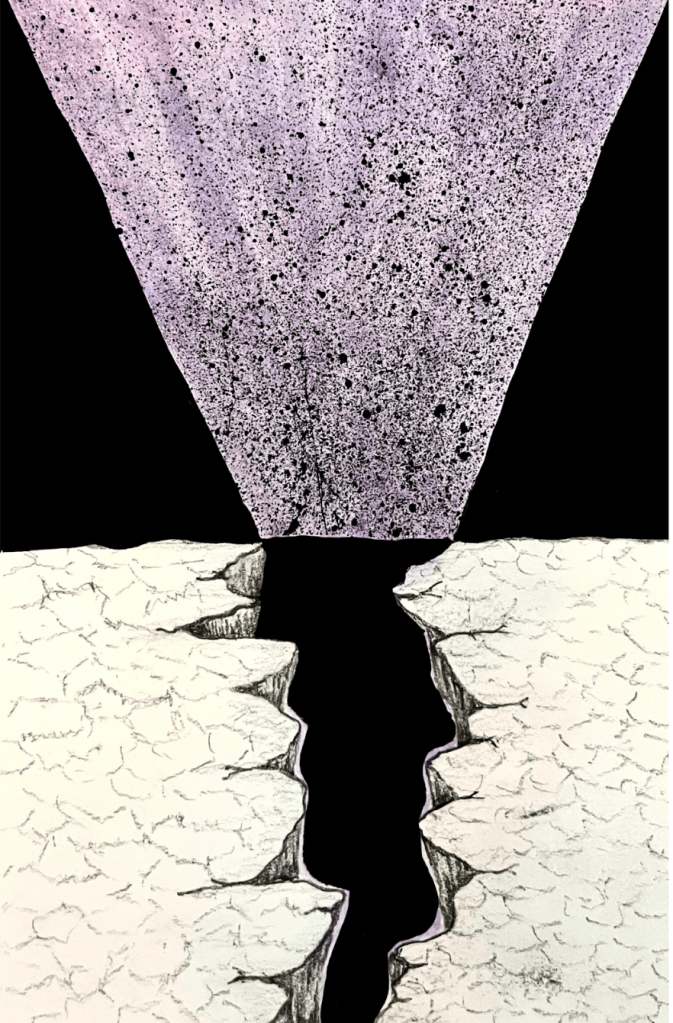
Until recently, the disease was restricted to Asia, Sub-Saharan Africa and the Americas but climate change has driven it to northern altitudes mainly in the region of the cryosphere (regions of the earth surface consisting of solid water). Climate change, causing global warming, has increased the thickness of the active layer in permafrost (frozen soil) by thawing at increasing rates. The thawing of the active layer starts off a series of processes such as soil cracking and solifluction. These occur particularly in warmer years as they facilitate the exposure of the Bacillus anthracis spores through pathways in the soil. As the bacteria is exposed to oxygen from its surroundings, it enters a dormant stage until favourable conditions arrive such as thawing of permafrost deep active layer.
In August of 2016, the Yamalo-Nenets region of Siberia faced an anthrax outbreak, 8 confirmed cases and 90 people hospitalised and causing the death of one baby. Cryologists researching this unexpected event believed that it was triggered by a heatwave, causing the active layer thickness to be increased by 26%, and snow depth to be increased by 43% between 2010 to 2016. This increased snow contributed to the permafrost thaw by insulating the soil, preventing it from fully refreezing. The anthrax was then exposed to herbivores – particularly, reindeers who fed on it. After their death, their carcasses released anthrax spores, posing a public health problem etc.. Over 2,300 reindeer died in the outbreak, primarily affecting reindeer-herding families who were subsequently relocated for safety.
As global warming intensifies, it remains clear that the understanding of this reemerging pathogen is key to safeguarding certain environments – as well as animal and human populations. Its targeting of herbivores not only leads to their death, but also to severe sanitary challenges- especially in areas with limited veterinary infrastructure. Therefore, there is ongoing cryology research which aims to improve outbreak prediction, as well as prevention strategies for communities to tackle outbreaks. Anthrax’s return is a powerful reminder that climate change could revive more than we expect. Will we be ready to face the diseases of the past?
 Kinesis Magazine