
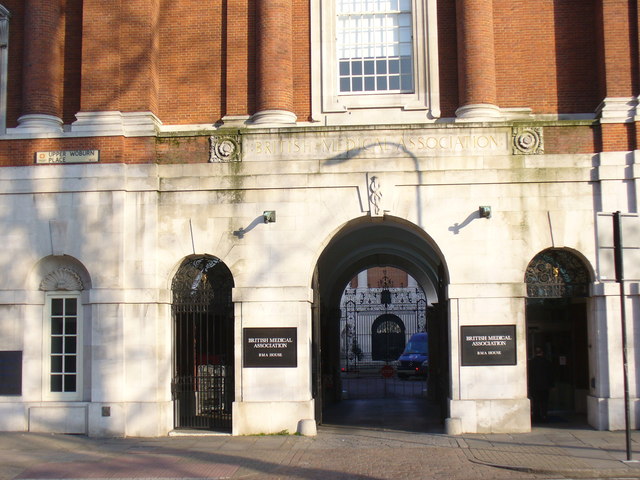
Picture: British Medical Association Entrance to BMA House [for “the professional association for doctors] on Upper Woburn Place. http://www.bma.org.uk/, taken by Colin Smith
Author: Altay Shaw
The British Medical Association (BMA) previously announced a resident doctors’ strike will conclude tomorrow on the 22nd December, which has been confirmed following a vote from resident doctors, after a last-minute offer was rejected, with 83% of those who voted in favour of the strikes going ahead.
The latest run of industrial action, the 14th since the start of 2023, showcases the raised escalation between the BMA and government as the union continues to campaign for full pay restoration and increased training spots.
The strikes, which started on Wednesday, 17th of December, came as the government refused to sit down and include full pay restoration as part of a new offer to resident doctors. The Health Secretary, Wes Streeting, took to Sky News to criticise both striking doctors and the BMA, accusing them of “juvenile delinquency” and behaving like “moaning minnies”. His conduct led to the Doctors’ Association UK backing a letter of complaint against the Health Secretary for unbecoming conduct under the HMG Ministerial Code.
The escalation of comments comes as the Health Secretary formerly accused the BMA of behaving in a “cartel-like behaviour” and stated the union is “no longer a professional voice for doctors”. Despite 97% of first-year doctors supporting the strike mandate, the Health Secretary has not been able to provide any evidence to support his accusations.
Tensions have continued to rise following the penultimate offer from the government, meaning there would only be an increase of 2,000 jobs over the next three years. Though the latter deal claimed to increase the number to 4,000 jobs, it solely offered to rearrange positions and not actually offer anything for those who wanted to become a consultant.
This is despite the fact that only 10,000 doctors were able to continue their training to become consultants, while 30,000 applied. This shortfall highlights the void between the BMA and the government’s stance, made especially worse as the Health Secretary continues to position the health service into debt through private contracts and PFIs.
In a statement on the BMA’s website, Dr Jack Fletcher, chair of the BMA’s resident doctors committee (RDC), said:
“ [The strikes] do not need to go ahead. Gradually raising pay over a few years and some common-sense fixes to the job security of our doctors are well within the reach of this Government. It would ensure both the long-term strength of our healthcare workforce and spare the country the indignity of seeing unemployed doctors at a time patients are queuing up to even see a GP”.
Kinesis Magazine tried to reach out separately to the BMA Media Office but has not received a comment back.
 Kinesis Magazine