
Writer: Teni Gomez
Editor: Savina Hui
Artist: Jin Yu
In this digital age, video games are an increasingly popular way to spend your free time – and for good reason. They offer immersive storytelling, stunning visuals, and an opportunity to connect with others. For many, they also serve as a powerful means of escape, and a way to cope with mental health challenges.
While the relationship between gaming and psychological wellbeing has been extensively studied, much of this research overlooks the LGBTQ+ community. This omission is significant, as queer individuals are at high risk of minority stress – the “physiological and psychological effects associated with the adverse social conditions experienced by […] stigmatized social groups” – through events like familiar rejection, bullying, and discrimination from healthcare providers. This greatly increases the risk of developing mental health issues like anxiety and depression, as well as damaging behaviours such as substance abuse, self-harm and suicide. Many therefore turn towards video games, especially ones with respectful and positive queer representation, to alleviate mental health difficulties. The 2024 publication of the Level Up! Project summarises recent findings, highlighting the meaningful impact of queer representation in video games on queer mental health:
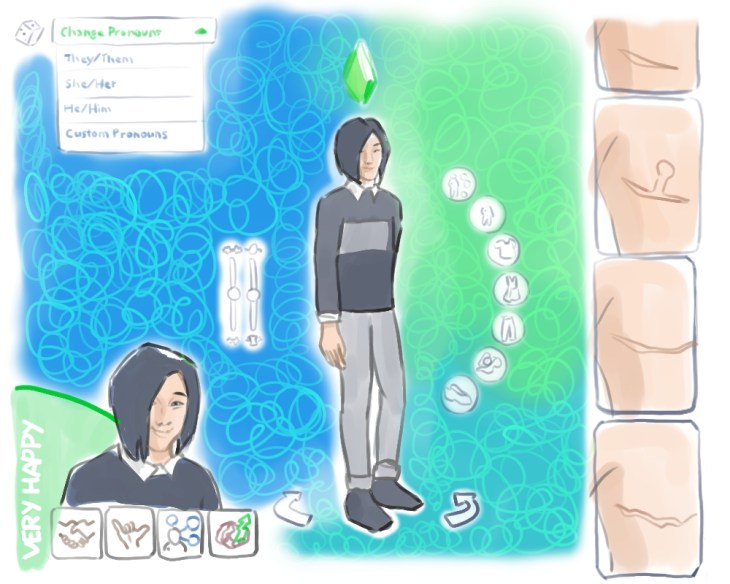
One of the most widely studied aspects of queer identities and video games is the avatar. In customisable games such as ‘The Sims 4’, players can customise characteristics of their avatar, including their name, pronouns, sexuality, physical traits, fashion sense, and behaviour. For queer ‘gaymers’, this ability to express themselves through avatars can be incredibly affirming. It allows individuals to explore their gender and sexual expression in a relatively safe environment, where there is a low risk of judgement, discrimination, or violence from others. This can strengthen their sense of identity and improve their wellbeing. Additionally, for those who are already confident in their identity but live in unaccepting environments, avatar games can offer a much-needed, affirming escape.
Beyond avatar games, storyline-driven games can also provide powerful representation and improve queer mental health through accurate and tasteful representation. ‘The Last of Us’ series, for example, explores a complex queer relationship amongst incredibly dark circumstances, as well as featuring the story of a transmasculine character who was banished from apost-apocalyptic cult because of his identity. Seeing queer characters portrayed with complexity and humanity fosters a sense of belonging in gaymers, communicating that their identities are valid and their stories worth telling. Additionally, through being fans of the same franchise, queer individuals can become part of an affirming community, something which is particularly important for those living in remote areas where they are the only queer person they know.
Importantly, well-developed queer characters not only benefit LGBTQ+ players but also non-queer audiences. By challenging stereotypes and portraying queer people as human, video games can promote empathy, reduce prejudice, and contribute to wider social acceptance.
Despite this progress, there is still a long way to go. Stereotypical tropes, like the flamboyant gay sidekick, persist. Representation of trans, intersex, and queer people of colour also remains limited. Continued improvement in these areas can lead to greater normalisation of queer identities, deeper exploration of gender and sexuality, and increased self-acceptance, ultimately contributing to better mental health for many queer individuals.
 Kinesis Magazine