
Author: Ladislav Seres
Editor: Katie Kavanagh
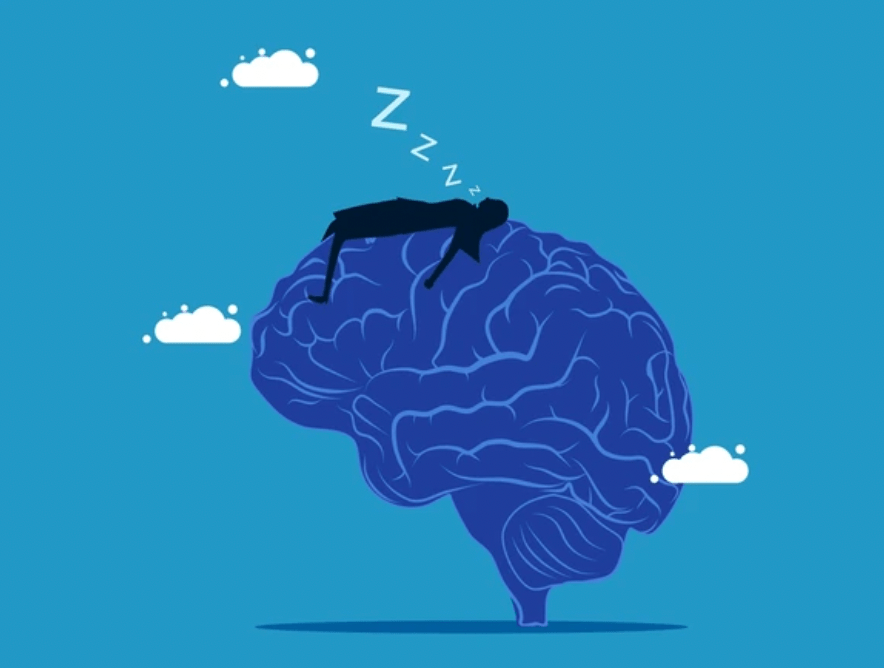
What if “sleeping on it” is just as crucial as the process of studying? From ancient times to modern science, sleep has mystified us: what exactly is it, why do we need it, and how does it influence our lives? Neuroscientists are now uncovering the role that sleep could play as a powerful regulator of our knowledge, actively helping us retain and recall information that we have studied.
The power of repetition in learning is undeniable, as it strengthens short-term memory. However, our short-term memory is limited; without further steps, we could only remember what we repeated 15 to 30 seconds ago. This is where consolidation comes in, a vital step in learning. Consolidation is the process by which short-term memories are transformed into long-lasting ones, stored for later recall. Think of short-term memory as a new string of numbers you need to repeat right now, while long-term memory is something as familiar as your birth date. It is this process of consolidation that sleep is believed to enhance.
The Karni test is a measure of recall over trials and after sleep. In this test, participants repeatedly recall a specific sequence of numbers, with each trial improving their performance. After 12 trials, they can remember up to 60% more numbers. This improvement reflects the learning curve many of us are familiar with. However, when participants are asked to sleep and then try recalling the same sequences the next morning, there is an additional 10% increase in the number of sequences they can recall. This jump in performance strongly suggests an active role of sleep in memory consolidation.
The architecture of sleep is both complex and dynamic, but certain stages seem particularly key for memory storage. Sleep cycles through stages of light sleep, slow-wave sleep (or deep sleep), and REM sleep. Of these, slow-wave sleep appears to do the heavy lifting in the learning process. When practising a task, such as a motor skill, the brain regions engaged show increased slow-wave activity, and the greater this activity boost, the better we perform on the task later. Scientists have developed techniques to amplify these slow waves in specific brain regions through acoustic stimulation during sleep, which has led to improved recall of word pairs and stronger neural connections.
But what links slow waves to learning? One theory is the synaptic homeostasis hypothesis (SHY), which suggests that sleep “resets” our synapses, strengthening crucial ones while pruning away those that are less important. This resetting during sleep may streamline our neural connections, creating space for new learning the next day.
So, does that mean we should ditch studying in favour of sleeping before exams or presentations? Not exactly. The exact mechanisms of how learning and sleep interact are still being investigated, and slow-wave sleep might not be the only crucial stage. REM sleep, which resembles the brain’s awake activity, seems to play a unique role in learning by fostering new connections between ideas and memories. In REM sleep, our brain builds these networks in novel ways, letting us “see” problems from different perspectives, which is essential when we need creativity rather than pure recall.
Sleep might also enhance recall by reducing “noise”, the irrelevant information that accumulates throughout the day. During sleep, the brain sorts and prioritises, organising what is essential and filing it separately from the mental clutter, reducing interference with valuable memories.
So, should we really “sleep on it”? The consensus among scientists is a strong yes, though with some caveats. The quality of sleep matters significantly, as just one night of poor sleep can impair our ability to learn, recall information, and even regulate emotions. What we do know for certain is that sleep actively strengthens our memories through slow-wave activity and prepares us for creative problem-solving via REM sleep. In a way, sleep may be the ultimate study session, reinforcing what we know and priming us for what is next.
 Kinesis Magazine