
Author: Mhairi McCulloch
Editor: Nirvan Marathe
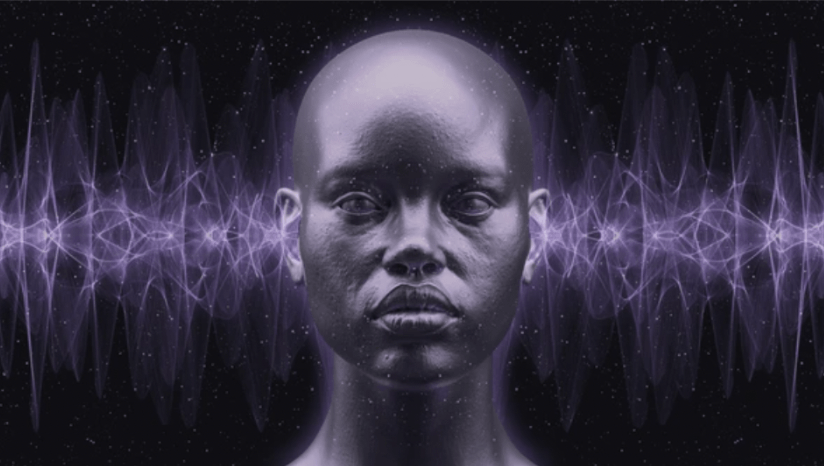
Can the right frequency unlock the brain’s potential? When we are in different states of consciousness or even unconscious, our brain’s frequency or ‘brain waves’ are altered. Our brain works through transmitting electrical signals as a form of communication between neural networks. These electrical signals are called action potentials which are rapid changes in voltage that allow neurons to communicate with each other. Since these signals are electric, they can be detected with electrical recording devices such as EEGs. Brain waves arise from the synchronized firing across many neurons within the brain. This synchronization produces a rhythmic oscillation, creating a continuous up-and-down pattern of electrical activity. The timing of these oscillations are measured as frequencies. Some examples of these frequencies and their associated states are:
Brainwave Frequencies:
Delta Waves (0.5–4 Hz) – Deep sleep, healing.
Theta Waves (4–8 Hz) – Relaxation, deep meditation, creativity.
Alpha Waves (8–12 Hz) – Calm focus, relaxation with alertness.
Beta Waves (12–30 Hz) – Active thinking, problem-solving, focus.
Gamma Waves (30–100 Hz) – Higher cognitive functions like learning, memory, and perception.
This is relevant to binaural beats because, like brain waves, sound waves also occur at specific frequencies. Binaural beats are auditory illusions. Two sounds of differing frequencies are played, causing our brains to perceive a third frequency formed from the difference between the two. This then leads to a phenomenon called brain entrainment where our brain waves can then adopt this frequency. For example, if one a frequency of 400 Hz is played in the left ear and a frequency of 410 Hz is played in the right ear, our brain will perceive a beat at 10Hz. This causes the brain to synchronize with this frequency in the Alpha wave range, associated with calm focus (Engelbregt et al., 2019), (Huang & Charyton, 2008).
Binaural beats are commonly used to help people study, sleep and relax (Chaieb et al., 2015). Not only can they be useful day to day, they may have interesting therapeutic potential (Basu & Banerjee, 2023). Attention-deficit/hyperactivity disorder (ADHD) is one of the most common neurodevelopmental disorders present in children. ADHD can be characterized by symptoms such as inattention, hyperactivity, and impulsivity. These symptoms often arise from issues with brain regions responsible for attention, self-regulation, and executive functioning (Barkley, R. A. et al., 2015). How this disorder presents between individuals and sexes however, has variations and can be hard to diagnose even with an increase in public awareness.
An FDA approved form of diagnosing ADHD is through EEG scanning, looking specifically at the ratio of beta:theta waves in the child’s brain. People with ADHD often exhibit lower levels of beta waves and higher levels of theta waves. This imbalance can contribute to some of the symptoms common in ADHD such as difficulties with concentration, task completion, and impulse control. Due to this discovery, neurofeedback has been used as a treatment to help people with ADHD. Neurofeedback works through multiple different mechanisms depending on the individual. The overarching method uses a live EEG and corresponding external stimuli such as a video to help train them to regulate their brain waves. A more accessible, non invasive and cheaper way (depending on your streaming subscription) to try to achieve this is by listening to binaural beats. Within the context of ADHD and the presentation of reduced beta waves and increased theta waves, studies suggest that listening to binaural beats in the beta range may help those with ADHD alleviate some symptoms by increasing their focus and attention(Colzato et al., 2015), (Basu & Banerjee, 2023).
While binaural beats are promising, it is important to acknowledge that more research needs to be done to fully understand their long term effects and their efficacy across different presentations of the disorder. Despite this, they may still prove to be a beneficial supplemental tool alongside medication to help improve attention and cognitive function in those with ADHD.
References
Barkley, R. A. et al., (2015) Attention-deficit hyperactivity disorder: A handbook for diagnosis and treatment, 4th ed. (n.d.). Retrieved February 11, 2025, from https://psycnet.apa.org/record/2014-57877-000
Basu, S., & Banerjee, B. (2023). Potential of binaural beats intervention for improving memory and attention: insights from meta-analysis and systematic review. Psychological Research, 87(4), 951–963. https://doi.org/10.1007/S00426-022-01706-7
Chaieb, L., Wilpert, E. C., Reber, T. P., & Fell, J. (2015). Auditory beat stimulation and its effects on cognition and mood States. Frontiers in Psychiatry, 6(MAY), 70. https://doi.org/10.3389/fpsyt.2015.00070
Colzato, L. S., Barone, H., Sellaro, R., & Hommel, B. (2015). More attentional focusing through binaural beats: evidence from the global–local task. Psychological Research, 81(1), 271. https://doi.org/10.1007/S00426-015-0727-0
Engelbregt, H., Meijburg, N., Schulten, M., Pogarell, O., & Deijen, J. B. (2019). The Effects of Binaural and Monoaural Beat Stimulation on Cognitive Functioning in Subjects with Different Levels of Emotionality. Advances in Cognitive Psychology, 15(3), 199–207. https://doi.org/10.5709/ACP-0268-8
Huang, T. L., & Charyton, C. (2008). A comprehensive review of the psychological effects of brainwave entrainment. Alternative Therapies in Health and Medicine.
 Kinesis Magazine