
Author: Amaranta Chavez
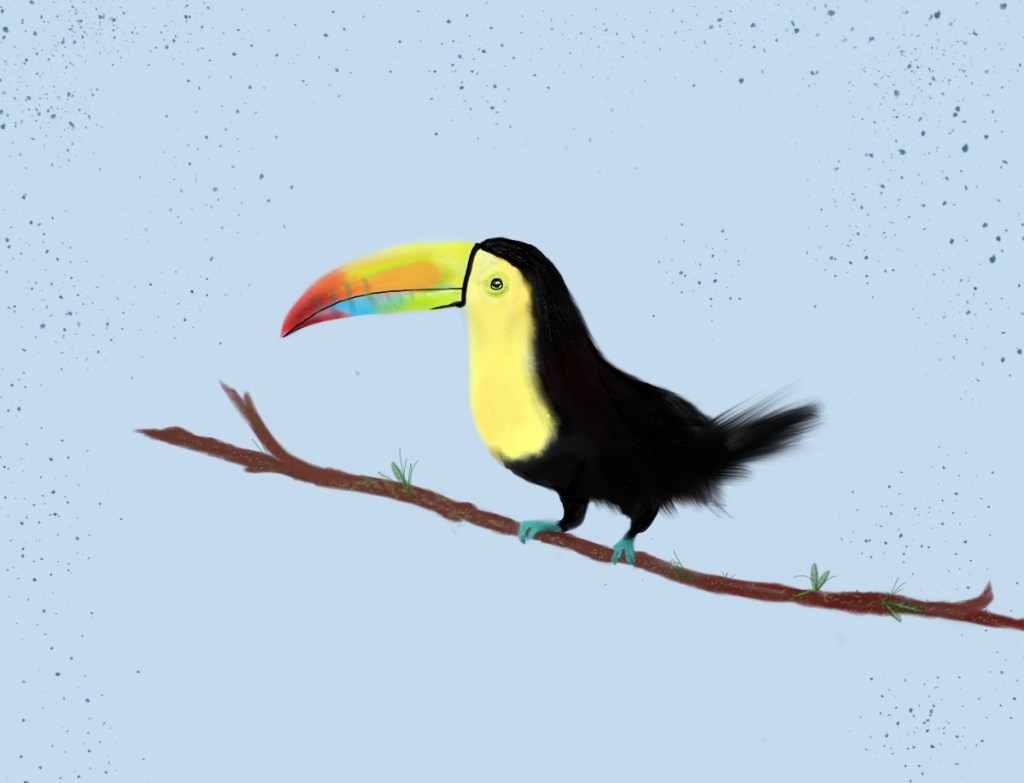
Artist: Amaranta Chavez
Editor: Nirvan Marathe
Paradise can be found a six hour journey from Georgetown, in northwestern Guyana. Hidden within the rainforest, through the winding canals of the Waini river, the indigenous village of Warapoka is bursting with life. Six hundred indigenous Warau people own and protect 101km2 of land. In this region, you can spot a hundred wild animals before breakfast, which is what a group of researchers and students did in the summer of 2022. I was fortunate to be part of this group.
Warapoka is filled with incredible flora and fauna,including the harpy eagle, red howler monkeys, jaguars and plants with potential applications for western medicine. Unfortunately, much of Guyana’s rainforest and its precious biodiversity is threatened by natural resource extraction, such as gold mining. However, the Warau people not only treasure their connection to nature but rely on it, and so are fighting to save it. Until last year, the array of wildlife present in and around the village had not been officially documented. Researchers and teams of students worked with guides from the village to create a species list that could be used to boost ecotourism. By attracting scientific researchers and environmentally conscious travellers, the region can profit off of its natural wonders, rather than practices that would lead to its destruction. Conservation Magazine features an interview with the Tashao (leader) of the village, which explains his vision for the future of Warapoka
The research that took place was a cultural exchange as much as a scientific exchange. A typical day involved surveys of mammals by tracking footprints or camera trapping. We also surveyed birds and bats using point counts or mist netting; this involved putting up a long, thin net and waiting at short intervals for them to fly into them so that we could carefully extract them and take measurements, such as wing length. Herpetofauna (reptiles and amphibians) were surveyed by observation when out on walks, and butterflies were surveyed using catch and release. In every case, identification was the aim, but more information was taken when possible. Unfortunately statistics cannot do justice to how the guides could spot animals with unimaginable speed and ease, or how one of them, Newton, had perfected the call of the harpy eagle. Our guides taught us so much about the wildlife there, sharing their knowledge of where and when to find animals, with the researchers using identification guides to confirm species names.
Spending time in the community of Warapoka helped us understand how important nature is for their identity and way of life, such as how they use different plants to weave baskets for different purposes and occasions. They have a physically demanding subsistence lifestyle, and the long-standing human snake conflict remains. The presence of many venomous snakes, such as the bushmaster, combined with lack of education of snakes, increases the risk of people killing or being bitten by snakes. Despite this, they live in harmony with the land instead of trying to dominate it. The most pressing threat all indigenous communities face is lack of recognition over their territory and limited right to be involved in political decision-making. This inequality is damaging to them but also to the rest of the world; indigenous communities hold vital ancestral knowledge on how to adapt, mitigate, and reduce climate change and disaster risks.
In the village, we weren’t treated like the strangers we were; we were treated like family. I will never forget the leaders of the community standing on the deck, waving us goodbye as we floated down that liquid road one last time. With a smile on their faces, they reminded us to tell our friends about Warapoka, so that is what I am compelled to do.
 Kinesis Magazine