
Author: Catherine Turnbull
Editor: Atufa Shabnum
Photo Courtesy: Climate Clock. World
Doom and gloom are plastered all over the news these days but how close to the end of the world are we really?
We’ve become numb to the endless news of how the UK is on the brink of recession, that we must act now against climate change before it’s too late, and how it’s only a matter of time before the next deadly pandemic arises. But scientists have a way to measure how close humanity is to the end of life as we know it…and it is known as the doomsday clock.
The hands of this hypothetical clock are determined each year by the Bulletin of the Atomic Scientists which resides on the Science and Security Board. This was founded by scientists such as Albert Einstein and Robert Oppenheimer after the development of atomic bombs during the Manhattan project. Once the hands reach midnight – it is the end of life as we know it.
The risk to society has become exacerbated since Russia’s invasion of Ukraine, and now with the threat of nuclear weapons lingering in the air, the doomsday clock is only 90 seconds away from midnight. This is the closest the clock has ever been to midnight since it was first established in 1947. The furthest the hands have ever been away from midnight was at the end of the cold war in 1991 when the Strategic Arms Reduction Treaty was signed by both the U.S. and Soviet Union to limit the number of nuclear weapons. Back then the clock was at 17 minutes to midnight.
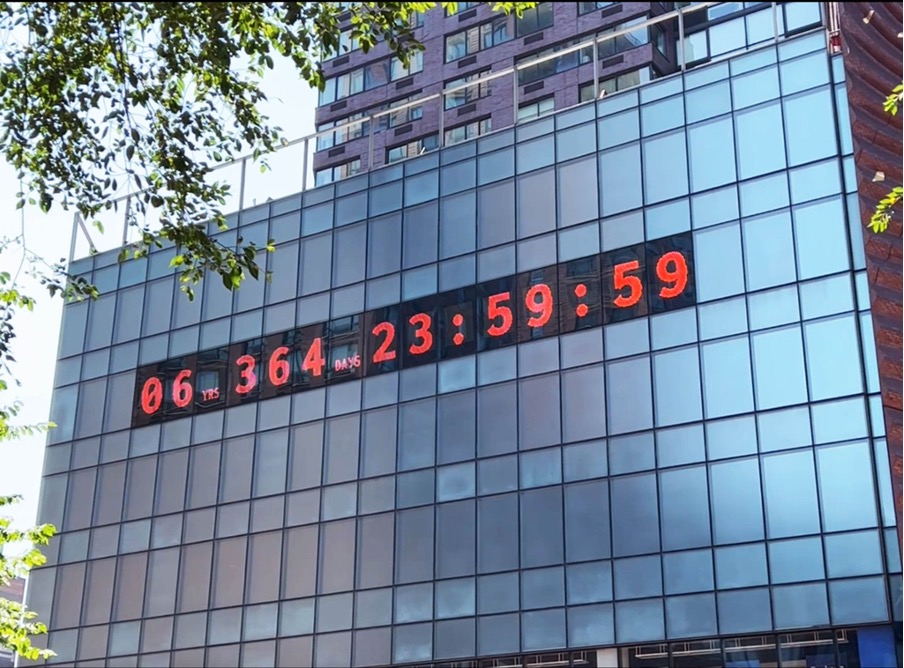
It’s not just nuclear threats that can harm society. Another man-made problem has persisted to damage our feeble existence: climate change. In 2007, the clock was moved to 5 minutes to midnight due to the threat that climate change can inflict upon the future of humanity.
Putin’s war has since prevented global efforts to combat climate change due to the cut-off of Russian oil supplies. Since then, many countries relying on such resources have had to expand their searches elsewhere. This led to the uptake in the use of natural gas rather than limiting it; thus, further contributing to global warming.
Countries across the globe have agreed to help limit global temperatures to 1.5 degrees Celsius – as set out by the Paris Agreement in 2015. This is a legally binding decision undertaken by 196 different parties – the first time a multicultural effort has been united against climate change. Although this temperature change seems minor, this tiny increase will have a dramatic effect on weather patterns across the world, leaving many less developed countries the most vulnerable.
As sea levels rise, less land is available to house our ever-growing population of 8 billion people. More severe weather will become common, creating floods, famine, and destruction. We saw this last year with floods in West Africa and Pakistan, whilst Europe experienced a heat wave that led to poor harvests, which increased the already exacerbated food prices from the ongoing conflict in Ukraine. This is why governments around the globe must act now on this real threat which has only been taken seriously within the last few decades. With the G7 summits of the world’s most economically influential countries meeting annually to discuss global issues – including supplying Ukraine with military aid and combating climate change – let’s hope we never see the results of the planet heating up more than 1.5 degrees Celsius.
By the beginning of 2020, the clock reached the closest it had been to midnight up until that point: 100 seconds remaining. This was before the COVID-19 pandemic became a global emergency.
The pandemic was and still is the epitome of unprecedented times, completely changing our lives overnight, a true measure of what the doomsday clock represents. The pandemic particularly highlighted which countries were more equipped to adapt to the biological threat of a new human disease. This should be a wake-up call for more privileged countries to help those who struggled in the early days of the pandemic since limiting the spread of the disease requires global collaboration. Moreover, the ease of the emergence of a category 3 biohazard should concern us and make sure that humanity is better prepared for the next one.
With the ongoing conflict in Ukraine nowhere near resolution, the future use of bioweapons is a real possibility. Pathogens that cause fatalities or life-changing disabilities are obvious targets for such use. The inconspicuous use of anthrax (Bacillus anthracis) is a prime example of this ever since its spores were posted ominously through letters delivered to U.S. senator offices in 2001 after the 9/11 attacks. The bacterium spores were in powdered form, allowing for inhalation – leading to the deadlier form of the disease. With many diseases being zoonotic, infecting both animals and humans, there are plenty of carriers for such diseases. As our population encroaches on natural habitats, our interactions with animals will increase, through hunting, farming, and trading at wet markets – risking the transmission of a new zoonotic disease. Thus, global surveillance of newly emerging diseases is vital for preventing them from becoming a future biological weapon.
Overall, the presence of the doomsday clock itself isn’t to induce fear-crippling anxiety into us as we picture a ticking time bomb ready to explode and strip us of our future at any moment. But instead, it is to be taken as a clear objective measure for governments to determine how close our society is to a self-inflicted disaster – to act now before it’s too late. It is a time for reflection, to see how much damage humans are capable of, and a reminder of how just because something can be done doesn’t mean it should be. If anything, the doomsday clock shows how a united effort is required from every country to make a difference. Restoring peace and safety to everyone, along with kindness to the environment, is vital for the future of our survival. It shows that we cannot move forward unless we all move forward together, building a future for everyone.
 Kinesis Magazine